
Born on the 9th of April 1965, my first home was to be the beautiful hamlet of Teigngrace in Devon and it was here I was to live with my mother ‘Violet’ and father ‘Harry’ for the first 8 months. Mother had quite a tragic upbringing, losing her brother Victor to a road accident and sister Evelyn to rheumatic fever both at a very young age.
Mother had met my Father after he’d moved down from Crook in County Durham where he started driving buses for Devon General based in Newton Abbot. Mother was living in Liverton at the time and often rode her pushbike to Stover School where she worked alongside my Gran ‘Vera Cornish’.
One morning Mother had a puncture on her bicycle at the hill approaching the school and Harry happened to be driving by on the Moretonhampstead to Newton Abbot Bus. Fluttering her eyelids at him seemed to work as he pulled in to give her a lift to the school and the rest as they say is history.
We remained in Teigngrace for less than a year at 3 School Cottages which was tied to ‘Herders Farm’ where my grandfather Samuel Cornish worked as a farm labourer. It wasn’t until Sam lost his job that we were offered a move to No.24 Cockhaven Close, Bishopsteignton.
It was here we all lived together under the one roof, myself, Mother an Father upstairs and Gran and Sam downstairs. It was the last council house to be built in Cockhaven Close and was still being completed when we moved in
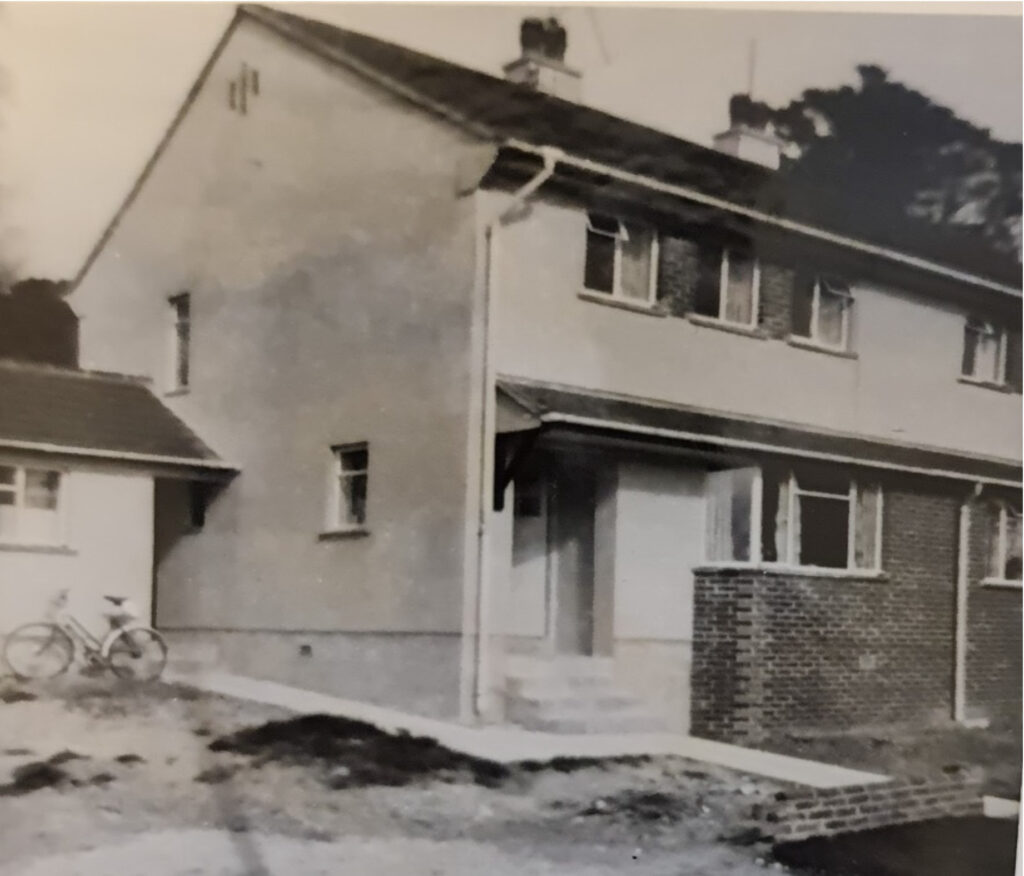
24 Cockhaven Close shortly after building 1965
Mother had taken a job at ‘Huntley’ the local retired officers home just a short walk away, which in winter would often prove slippery under foot:
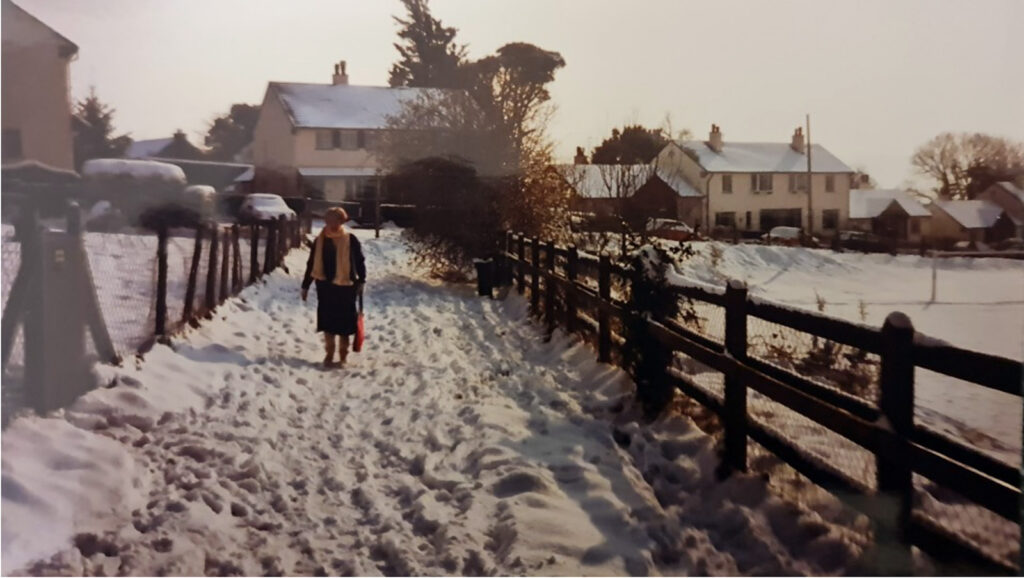
Photograph of Pathway from Cockhaven Close to Huntly
Meanwhile Vera and Sam had decided that retirement was now their best option.
It was a quiet cul-de-sac and the neighbours were lovely, although Father never seemed to think so as he continuously moaned about everything and everyone, something I never got to grips with. Equally, he would never let me out of his sight, always on the lookout for my whereabouts, never allowing friends into the house and never allowing myself into others. This I found most frustrating as my friends were always granted such freedom. I never understood the reason for his behaviour until much later in life, so I assumed it a ‘social norm’.
Father was a very controlling man during our time in Bishopsteignton, not just with me but with everyone and everything and had a nasty temper to go with it, regularly punching holes in doors and throwing things around the house.
I remember one episode when he arrived home from a late shift on the buses and my grandad kept repeating to Mum ‘he hasn’t been working late, he’s been up to no good’. When father got wind of this, the argument that followed led to Sam grabbing a knife from the kitchen drawer and trying to stab my Dad with it. Luckily, Frank Down a neighbour from across the road heard the commotion and came running into the house grabbing the knife and placing it back in the drawer, but Sam tried for the knife again however Frank managed to trap his hand in the drawer this time. Whilst this was happening Franks wife Debbie came running into the house shouting ‘quick Frank, Tim’s Mum is trying to jump out the bedroom window’ and running upstairs Frank managed to calm Mum down and bring her back indoors. Soon after, an ambulance was called for Sam and he was taken off to hospital where he could seek help, apparently suffering from bad nerves. My judgement now would suggest he never liked my father from the start. And to be honest neither did I.
Now that my fathers antics have been established, I would like to return to the first thing I remember about growing up in Bishopsteignton. It was the sound of the wind coming off the Teign. It didn’t rush like it did on the coast—it slipped through hedges, whispered past stone walls, and nudged at windows as if it knew everyone inside by name.
I remember vividly the sound of British Rail workers late at night working on the lines along the River Teign, the sound of Stock Car racing echoing up the river from the Racecourse, the sound of Powerboat racing at Coombe Cellars and the sound of pile driving re-enforcements into the river bed as they constructed the A380 bridge towards Penn Inn. My mother always said that when I was young the railway workers warning siren for oncoming trains used to haunt me in the early hours of the morning, so she used to switch on the upright Hoover to get me to sleep. I often now wonder why I struggle to sleep after such trauma Lol !!!
That aside, I couldn't help but feel the village had its own world. The lanes were narrow and winding, lined with foxgloves in the summer and slick with fallen leaves in the autumn. You learned early to step aside for tractors, to greet every passing walker, and to recognise the rhythm of the day not by clocks, but by sounds—the distant church bells, the low hum of a car climbing Murley Crescent and the chatter outside the pubs as evening settled in.
Passers by and shop keepers knew me. Even at the age of twelve I was able to walk to the village shop (when father was at work) and pick up a tin of Ringers A1 tobacco for Grandad Sam.
My earliest memories include that of school. I started off at the old Primary School, where shortly afterwards I was moved to the new school in Cockhaven Close. Of course, this proved handy for me as I was able to walk home for lunch, however i could never make an excuse for being late.
Cockhaven Close was a quiet place in the 70’s, especially concerning vehicles. As you can clearly see from this photograph of myself chatting with Gillian Down, Leslie Down and Martin Spear, the cul-de-sac provided opportunity to roam without danger.
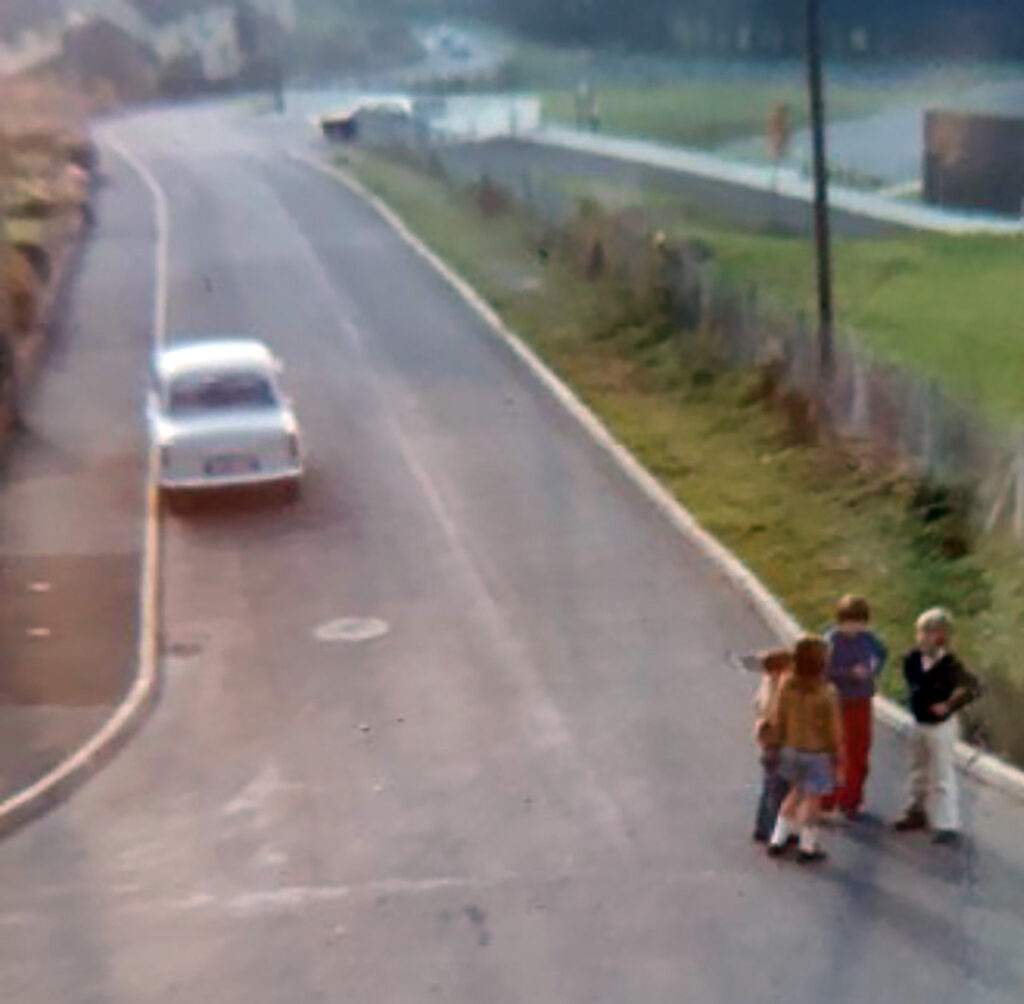
Photograph regarding Tim Newton
Summers were golden in a way that only childhood remembers. Long evenings stretched endlessly, filled with bike rides, scraped knees, and the quiet thrill of staying out just a little too late. The air smelled of cut grass and warm stone. You didn’t need much—just friends, a place to wander, and the sense that tomorrow would be just as full.
The playfield next to our house was also a haven for activity, however doubt was always cast as to the safety of the concrete pipes once there. Vivid memories of a ladder appearing over the wall behind Regs’ lorry have always stayed with me, followed by Sophie Sendra popping over from Bunters to save her the long walk around Lol !!!
We played tennis, we played football and Keith Ferris’ Dad Derek who I believe was a carpenter by trade always leant a hand to build us a Go-Kart where we would go flying down the Close and try and make the right turn into Horns Park.
Here you can see the lovely villager Reg Pepperell's SWEB lorry in the car park, where I would often see him walking home from work at the end of the day with his work bag over his shoulder closely flanked by his colleague Fred Sharland. You can also see myself, Les down and his sister Gillian equally parading the latest fashion for Cockhaven Close.
I clearly remember the Summer of 1976 when sitting on a stool on the footpath and the legs started sinking into the asphalt, boy was that a hot one. In contrast however, the hard winter a few years later proved quite the opposite. Snow, and plenty of it, and a few more cars in the Close !!!!
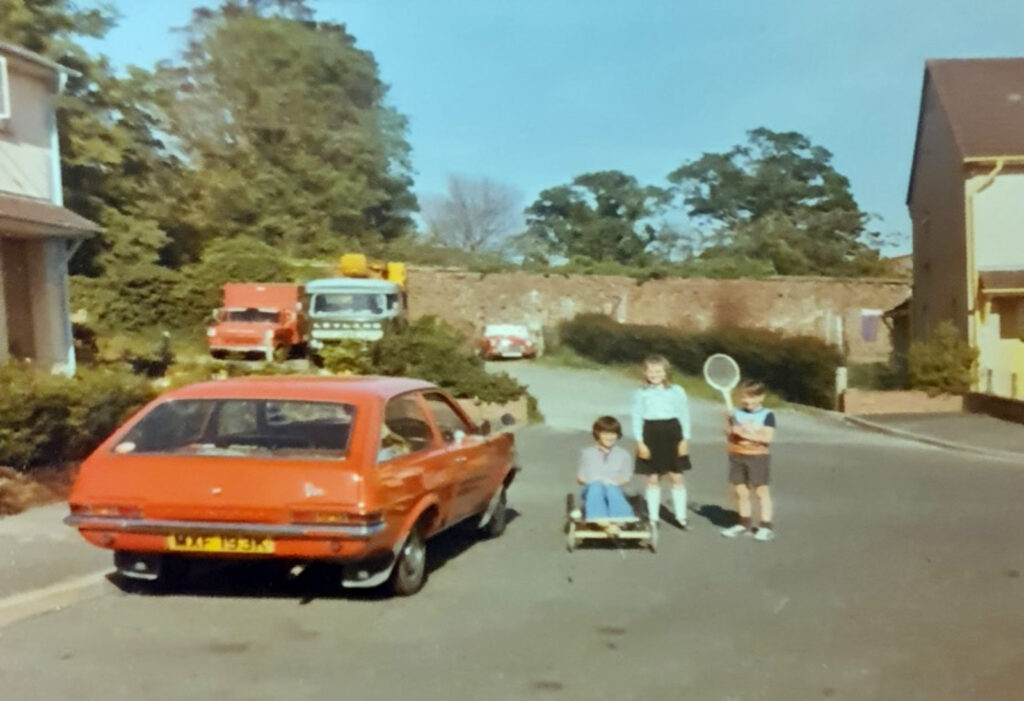
Photograph of Tim, Gill and Les. Reg Pepperell's lorry in the background
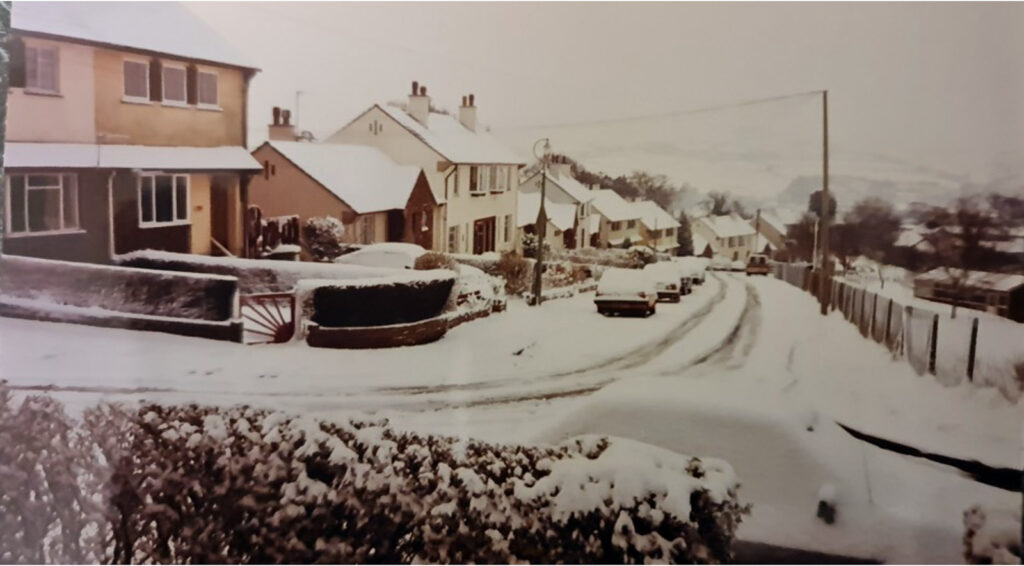
Photograph of Cockhaven Close c1985
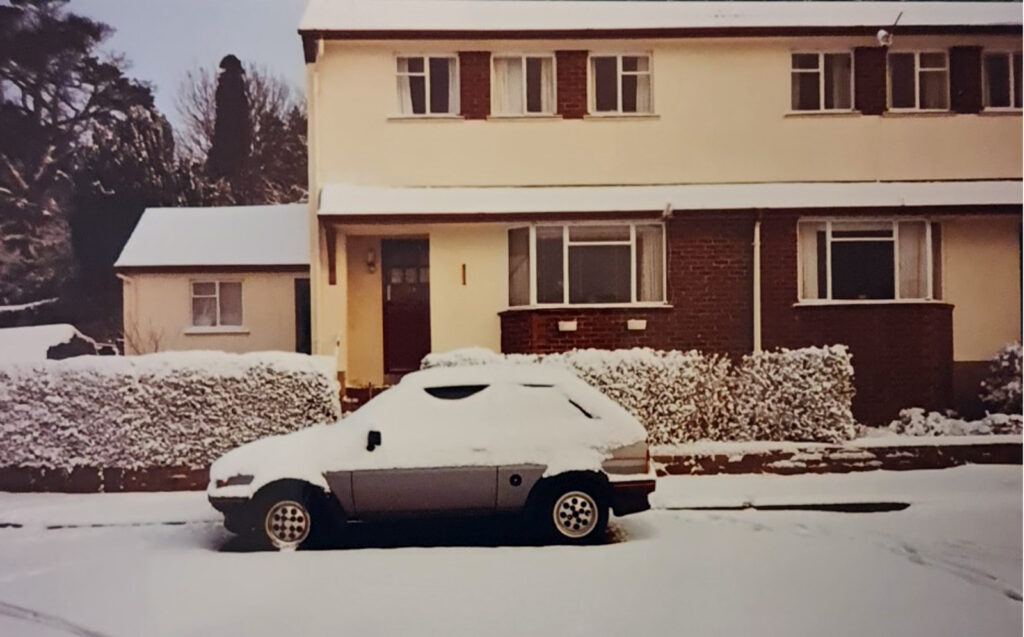
Photograph of Cockhaven Close c1985
Those Winters however, brought a different kind of magic. Frost traced patterns on our single glazed windows, and breath hanging in the air like smoke. The village would slow down. Lights glowed warmly behind curtains, and everything felt closer, tighter—like the world had drawn in on itself. Even the familiar roads felt different, quieter, as if they were waiting in the cold still air.
Growing up in the village also meant knowing people—not just faces, but stories. You knew who had lived in which house for decades, who grew the best vegetables, who always waved first. There was comfort in that, even when, as a teenager, you started to feel the edges of the village closing in. You’d stand at the top of a hill, looking out beyond the fields, often below Farmer Webbers wondering what lay further than the horizon you’d always known.
We ourselves grew our own vegetables, potatoes, carrots, runner beans and onions the size of footballs. We even had a pet rabbit called ‘Thumper’. However, when Thumper had aged, Dad shot it and we had it for tea in a stew. I feared father was quite sadistic in this context, as I remember a chicken arriving at the house one day from a local farmer. Yes, you guessed, it was going to be our Sunday dinner. However, when Father chopped its head off it ran up the garden with no head until he retrieved it from the hedge.
My late teens would often involve escaping on day trips to no place in particular. On one occasion myself Jonathan Morey, Steven Spear, Peter Hockin and I can’t remember who took the photo went on an adventure to Bridford Woods. For what reason I never recall.
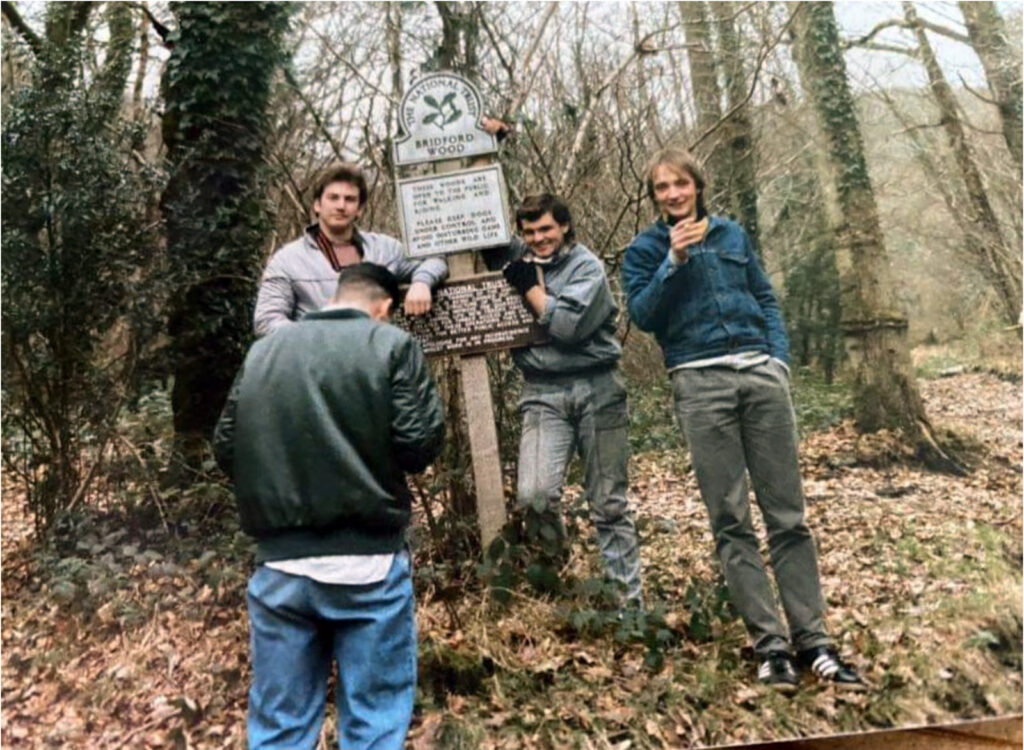
Tim Newton, Steve Spear, Jonathan Morey, Pete "The Postman" Hockin. Photo taken by Anthony Pepperell
During this friendship I have vivid memories of visiting the Elizabethan Inn at Luton with Peter Hockin. From where I remember we had consumed a fair amount of local cider, then started to consume the jar of pickled eggs on the bar. Alec the landlord didn’t find great pleasure when we started singing Tom Jones’ Delilah rather vocally, and preceded to throw us out for upsetting his diners as we shouted ‘we love eggs’ upon our extrusion.
Contrary to this behaviour, and something what started as a complete accident turned into a six-month journey I never expected. I stumbled into modelling with no real plan—just a chance opportunity that I almost ignored. I was shopping at Austins in Newton Abbot when an elderly woman approached me and asked if I’d ever done any modelling. The woman Lady Elizabeth Livingstone was apparently scouting for new models, accompanied by a rather dodgy looking Dennis Dale Greaves, who chauffeured her around in his Rolls Royce Silver shadow.
I felt a little awkward, as I was unfamiliar of what being in front of a camera would be like. However, over time, and a little persuasion, I was whisked off to model evening wear for Moss bros at the Imperial hotel in Torquay. My partner in crime was the lovely Jacqueline Burrell, daughter of the famous Dave Burrell who owned Aqua-land in Torquay who was world renowned for his underwater film work in many a box office hit.
Over time, what once felt awkward became natural. Each shoot taught me something new, from confidence and self-expression to patience and professionalism. There were moments of doubt, but also moments where I surprised myself and grew in ways I hadn’t anticipated. Looking back, this unexpected venture didn’t just introduce me to modelling—it helped me discover another side of myself I didn’t know existed.
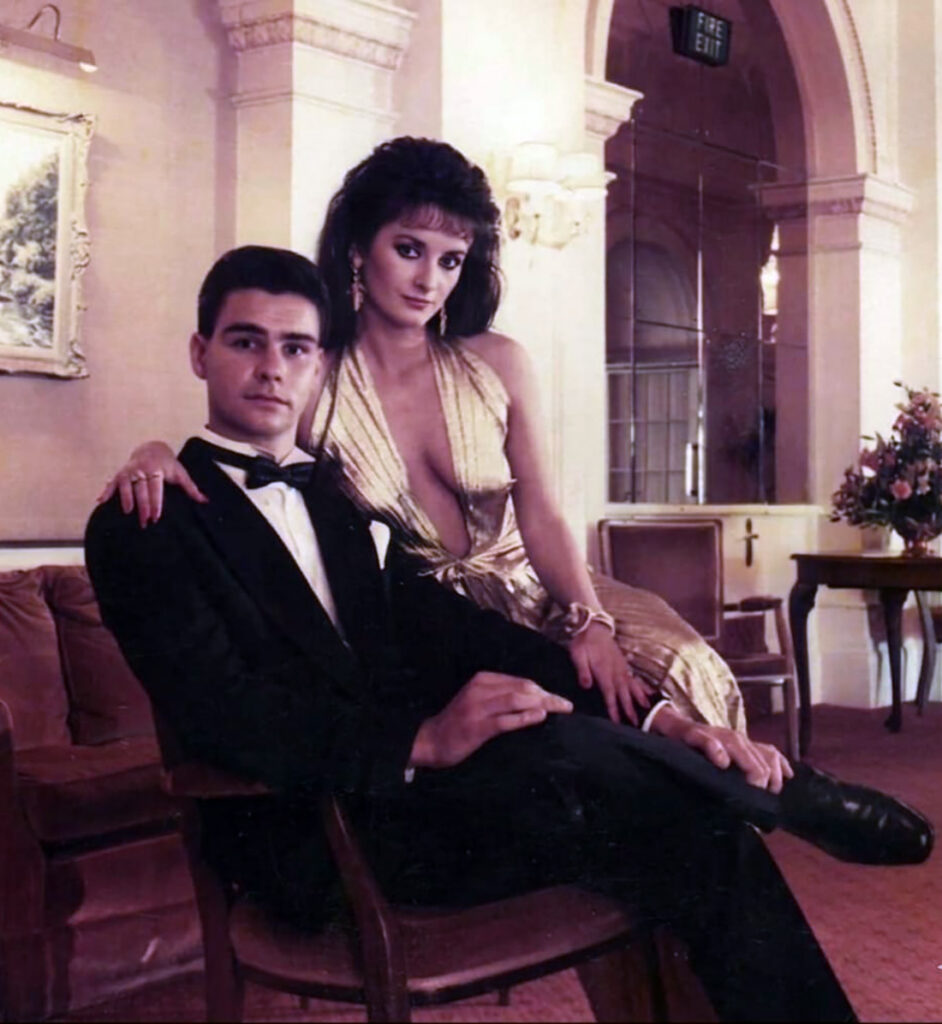
Tim Newton and Jacqueline Burrell model shoot at the Imperial Hotel Torquay 1986
Despite these odd adventures, leaving the village was something I felt inevitable. That’s what growing up does—it stretches you beyond the places that shaped you. However, my reason for leaving was to escape the controlling, authoritarian nature of my Father. But Bishopsteignton never really left me. It stayed in the small things: the way quiet feels, the way community should feel, the way a place can be both ordinary and extraordinary at the same time. However, the next few lines need mentioning with regard to a troubled soul.
The Runaway
I never felt comfortable being at home, it was never Mother it was always my Father. He was now on some sort of nerve tablet himself but his aggression was still terrible and I lived in fear in that house. I made every effort to stay out of the way as things were sometimes quite terrifying, then it got to the stage I needed to be as far away from that place as possible. This is when I took it upon myself to run away to Birmingham.
I managed to hitch a lift to Birmingham and upon arrival had no idea where I was going or what I was doing, all I knew is I didn’t want to be at home. Not being able to find anywhere to stay I just lay down on the pavement near a place called Snow hill until hopefully someone came along. Well as you can imagine being in a large city most people walk past you at 10pm thinking you’re just another rough sleeper however, someone did eventually approach me. This guy put his face close to mine and asked if I was alright, he was stinking of the heroin substitute Methadone and I thought to myself this could turn nasty.
As it turned out, this person proved very helpful and took me to the local ‘Salvation Army Hostel’ just up the road where he was also staying. At least now, I have a roof over my head for the night and the promise of a hot meal. I met this guy the next morning at breakfast though I must confess he looked a bit rough however, we managed to strike up a conversation in what I can only describe as some sort of street language. After about half an hour of chat, me now being anxious, depressed and desperate for some loose change subsequently parted company with my blank cheque book for the measly sum of £50 as I hadn’t a penny to my name.
Thankfully, I had enough sense to immediately report it stolen, not that there was any money in there, but it would at least prevent any unpaid advances being charged to an empty bank account. The next day after a little more wandering around the streets, I realised that things were not going to plan (as if I had one), so I found the courage to ring my father and tell him where I was. Much to my surprise and after a lot of shouting he agreed to come and pick me up from junction 1 of the M5 near West Bromwich, so I started to make my way there at a leisurely pace, after all he was at least three hours away. After the anticipated debriefing, things appeared normal at home for a while until fathers’ aggression started again and as you can imagine the feeling for me was no change there then.
In no time, I had managed to find work on a local building site and after probably ten months of hard graft I was fortunate enough to receive a tax rebate of £850. The temptation to get away again took the better of me and this time I took a coach to Gatwick Airport. Why Gatwick I shall never know.
After a short while I got talking to someone who had just arrived back from Israel and we have a lengthy discussion about his adventures. It may come as no surprise, but this became my next port of call and I promptly book myself on the next flight to Ben Gurion Airport in Tel-Aviv. Acting on information extracted from our conversation I manage to find my way to a meeting place where the locals would drive past picking up backpackers for a days work on a farm or similar.
Fortunately, I was chosen immediately and taken to a settlement called Ein-Yahav, a medium sized Moshav in the Arava Desert, it was here I would stay for 12 months until I became home sick (yes home sick).
Yet again my depleted purse had me pleading poverty when everyone on the settlement rallied around and raised enough money for a return flight.
I met some truly amazing and resourceful people during my stay and it seemed such a shame to be leaving them behind however, I truly felt I was on my way home when the British Airways plane taxied the runway and I promptly boarded to the welcome gift of a British newspaper and a cup of English tea.
So here I am back in Bishopsteignton, and it begins again, the expected debriefing and a bollocking for worrying Mum.
I return to work on the building sites this time accumulating money for my next escape, New York, then a bus ride to Lowell, Massachusetts. Whatever possessed me to take this route I never know, let alone the assumption I would find somewhere to stay, it was madness to say the least, but I was a very troubled soul.
Again I play the lost disorientated young man and ‘bingo’ this time I end up in a care centre for homeless mothers, full to the brim with large American women with childbearing hips and screaming children. As in Birmingham, I now have a roof over my head and the promise of a hot meal, though this hot meal was to give me food poisoning. It placed me in St Joseph’s Hospital on Pawtucket Street and landed me a $285 bill when I returned home five days later, this time courtesy of the British embassy, after spinning a yarn that I had lost my airline ticket when in fact I had had sold it to some stranger for half price.
You will be glad to hear that this is now the end of my escapism and I finally manage to leave home in the correct manor and establish a stable relationship with my now wife Cathy of 29 years.
Dave Robbins then became responsible for my next role in life, truck driving. Admittedly, this served me well for many years. However, due to an untimely stay at Exminster Psychiatric hospital in March 1985 I struggled to maintain good mental health.
During the last few years of my trucking life, I took it upon myself to discover the underlying issues that had troubled me for so long. Hence, I spent six years studying for a degree . Much to my surprise I achieved a goal I never thought I could. A Degree under my belt had finally given me an opportunity to have a better understanding of how my mind had been working.
At the age of 58 I graduated with a Bachelors Degree with honours in Forensic Psychology.
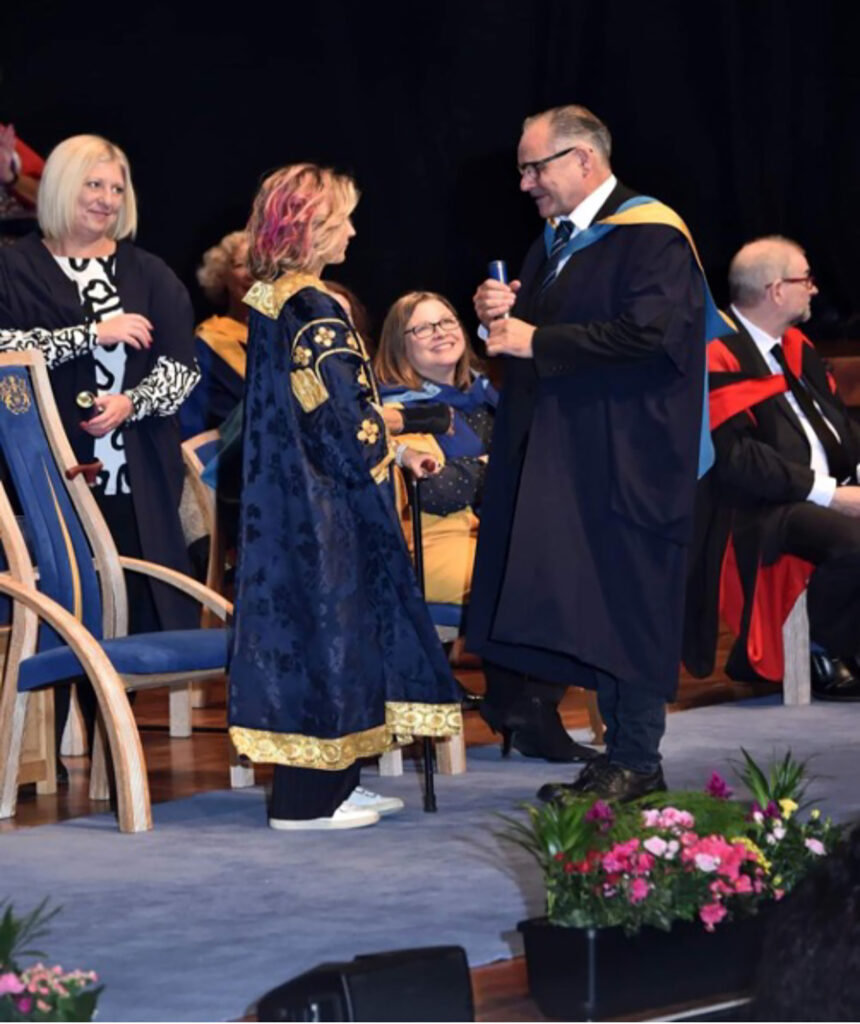
Photograph shows Tim Newton receiving his Batchelors Degree (BSc hons) in Forensic Psychology in 2020.
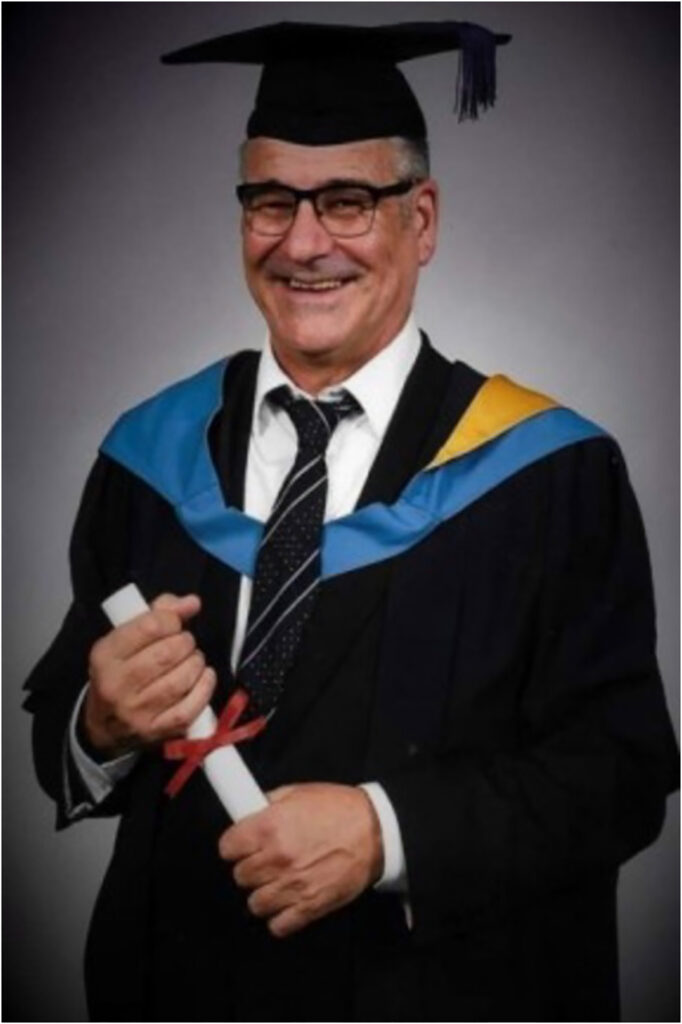
Tim Newton on his Graduation Day recieving his BSc Hons degree in 2020.
Now, when I go back Bishopsteignton, it’s different—but not entirely. The roads are the same, the hedges still lean in, and the wind still finds its way through. It carries something with it too—not just the present, but echoes of everything that came before.
Growing up there wasn’t really loud or dramatic. It was steady, rooted, and real.
And somehow, that made it unforgettable.
As I reflect on my heritage, and look at the photographs my dear Mother left, it shows even way back then how times were hard, though different in many ways.
Now residing in Bovey Tracey with my wife Cathy, I feel proud and honoured to be part of the Bishopsteignton Heritage.
Only again can I thank more than ever - James, Colin and the team at BH for allowing me the opportunity to share my stories.