
The Beginning: Origins on the Edge of Dartmoor
Nicholas Cornish (1654–1735)
Nicholas born and baptized in North Bovey in 1654 was to marry a Mary Endell on 30th May 1681.Nicholas would have been born shortly after the English Civil War, during a time of national recovery and rural stability. Living in North Bovey, on the eastern edge of Dartmoor, he would have been part of a small agricultural community dependent on mixed farming and common grazing. His presence in the village would suggest migration or descent from earlier settlers in the region with his burial recorded as remaining in North Bovey.
A Movement into the Teign Valley
Nicholas Cornish (1684–1745)
This Nicholas was also born and baptized in North Bovey where he was to marry a Mary May on 25th February 1706 in the village of Doddiscombsleigh.This next generation marked a clear shift eastward into the Teign Valley. A move which likely reflected a search for more productive farmland and expanding family needs. His burial is recorded as Doddiscombsleigh alongside other Cornish family members.
Establishing Agricultural Stability
William Cornish (1706–1767)
William married an Elizabeth Cox of which sadly provides incomplete information.
James Cornish (1729–1784)
James was baptized in Doddiscombleigh and later married an Elizabeth Hamlyn on 1st January 1747 in Moretonhampstead. This chapter reveals that during the 18th century the Cornish family were beginning to firmly establish themselves within Devon’s agricultural economy, with the assumption that this generation likely worked as yeo-persons or tenant farmers, attempting to build stability and local reputation.
Pre-Industrial Continuity
James Cornish (1753–1835)
James was born in Dunsford in 1753 and went on to marry a Joanne Rich on 12th September 1778 in Bishopsteignton. Both James and Joanne would have lived during the early stages of the Industrial Revolution. Though despite national change, the family appeared rooted in agriculture, aiming to maintain continuity in rural Devon life.
Establishment in Bishopsteignton
James Cornish (1790–1857)
James was born and baptized in Bishopsteignton and went on to marry a Mary Grills in 1810 and produced five children. George Henry Cornish (1813-1901), Thomas Rowell Cornish (1829-1900), Elizabeth Cornish (1830-?), Mary Susan Cornish (1833-1911), Ann Marie Cornish (1834- 1904).By farming Hayes Farm Ideford in 1851 and then Wolfsgrove Farm Bishopsteignton up until around 1881 suggests that by the early 19th century, the Cornish family had firmly established themselves as farmers of significance. Wolfsgrove Farm especially, represented a substantial holding, indicating economic stability and a respected position within the local community as reflected in article ‘Rooted in the Land: The Cornish Family of Wolfsgrove and beyond.’
Expansion into Luton
George Henry Cornish (1813-1901)
Son George born and baptized in Bishopsteignton went on to marry an Ann Adams. Both farmed ‘Venn Farm’ Teignmouth managing 200 acres & 3 labourers for a while before moving on to farm Higher Rixdale in Luton, yet furthering expansion of the family name.
George had now represented the full establishment of the family in Luton by farming 104 acres, employing 1 man & 1 boy and operated a successful and well-managed farm although being recorded an army deserter in 1836.
Daughter Anna Cornish went on to marry a James Vooght and farm ‘Laws Farm’ in Luton farming 150 acres and employing 4 labourers and 2 boys. Although no date for Annas death, it is confirmed that James Vooght died on 26th march 1886 leaving a personal estate of £557 1s.4d
Son James William Cornish aged 20 farmed alongside James and Mary at Wolfsgrove.
Daughter Mary born 11th March 1824 was baptized by the Rev John Comyns, a well seated gentleman in the Parish of Bishopsteignton.
Daughter Emma born 1829 sadly died young in 1857.
Daughter Sarah born 1831 in Manaton was widowed and recorded as residing in Plymouth as a dressmaker in the 1891 census.
John Cornish (1844-1927)
John was born and baptized in Bishopsteignton and went on to marry a Mary Elizabeth Hillman (1847-1915). Both are buried at Ilsington church alongside their son John E Cornish and his wife Alice Maud Mary White (below)
John E Cornish (1876-1941)
John born in Newton Abbot and baptized in Ilsington went on to marry an Alice Maud Mary White (1878-1963). John was a local farm labourer living in Ashburton before becoming a horseman at South Nethercott Farm, Spreyton. John is pictured below on his engagement to Alice (aged 18).
Alice is also pictured in her later years.
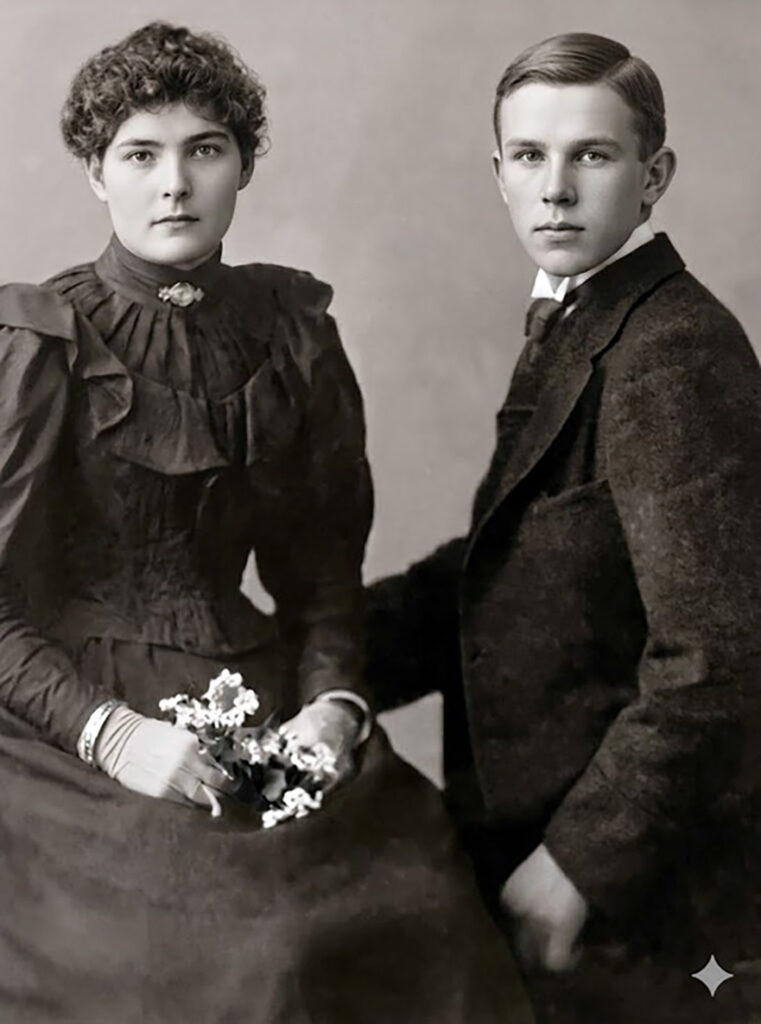
John E Cornish and Alice Maud Mary White on their engagement
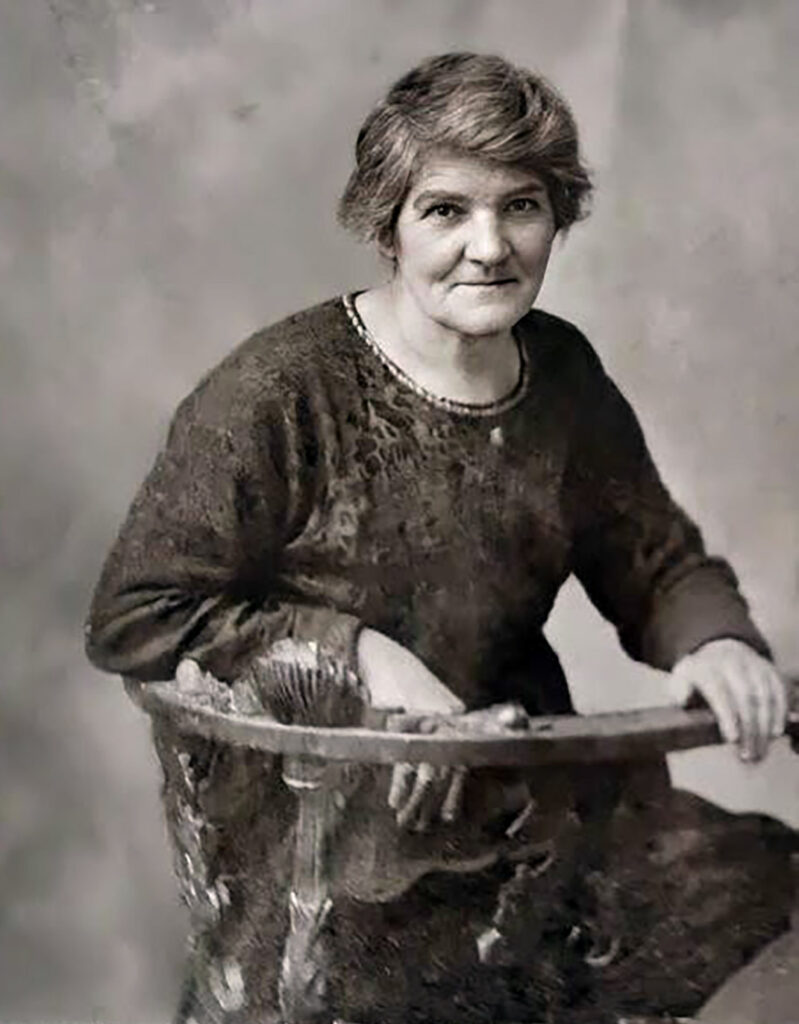
Photograph regarding Alice Maud Mary White
Pictured also are the daughters: Lucy May Cornish (1907-1951) who married a George Harvey Rowe from Ideford.
Elizabeth Cornish (1900-1992) at ‘Hestow Barton’ with her then husband William Hallet, son Trevor and daughter Brenda.
Alice Harriet Cornish (1910-1987) at Ideford Coombe with only son Ian from her marriage to George Edgar Raymont (1903-1980).
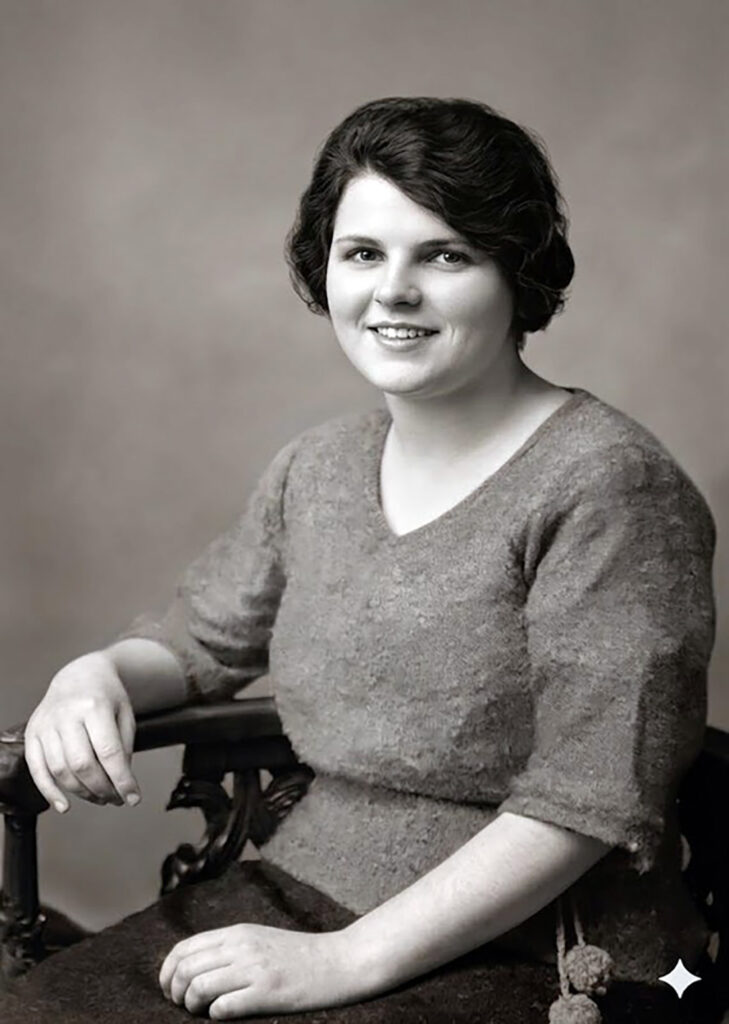
Lucy May Cornish (1907-1951)
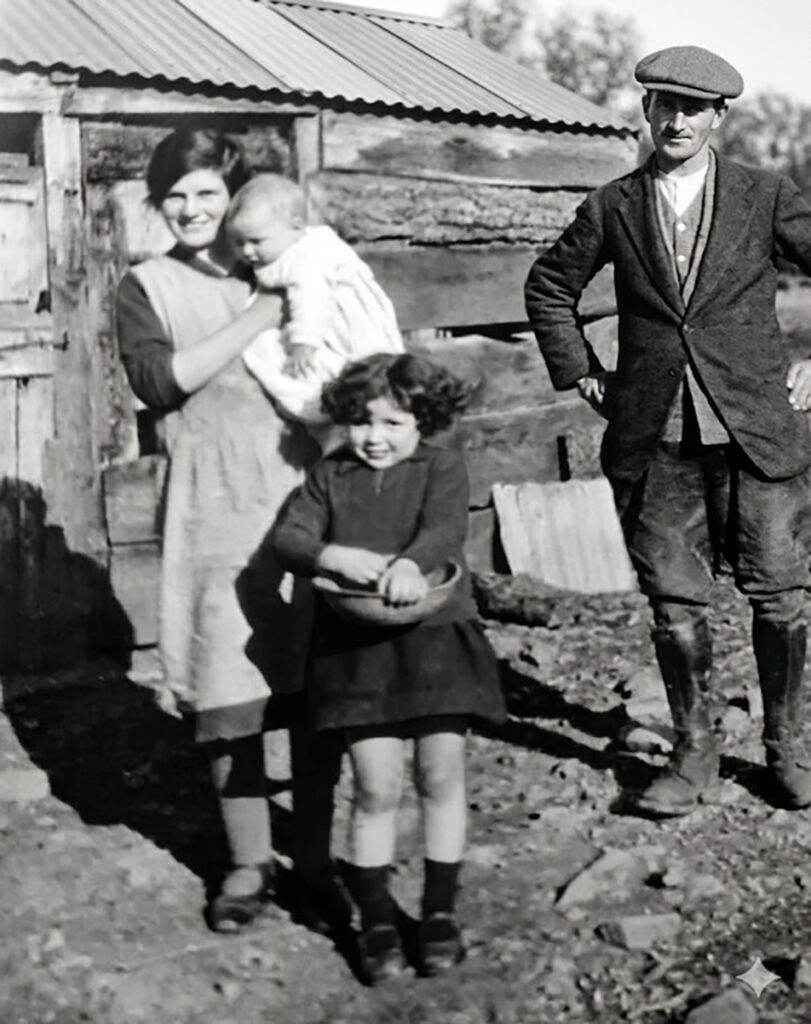
Elizabeth Cornish (1900-1992) daughter of John E Cornish (1876-1941) with her husband William Hallet, daughter Brenda and son Trevor.
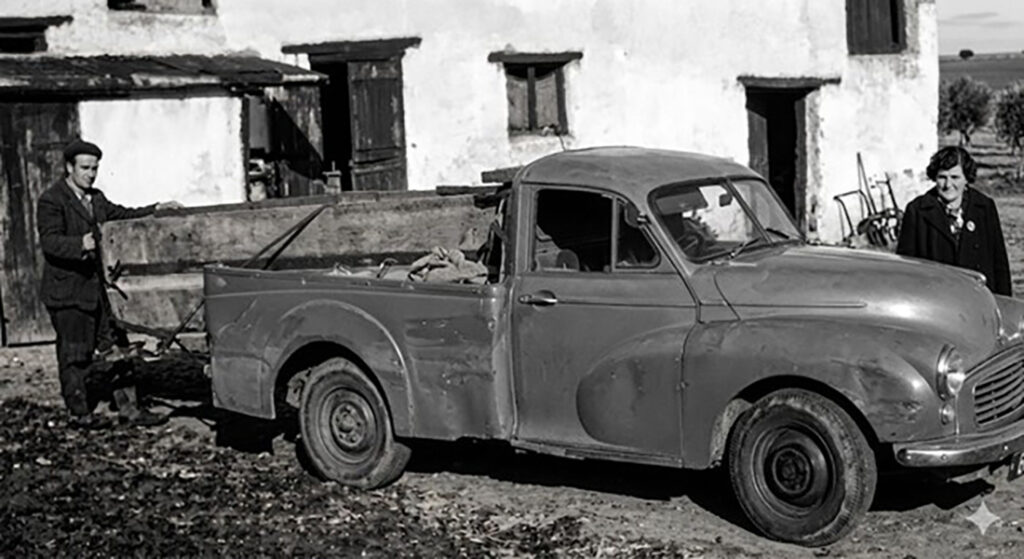
Photograph is of Alice Harriet Cornish (1910-1987) with her only son Ian pictured at Ideford Coombe from her marriage to George Edgar Raymont (1903-1980).
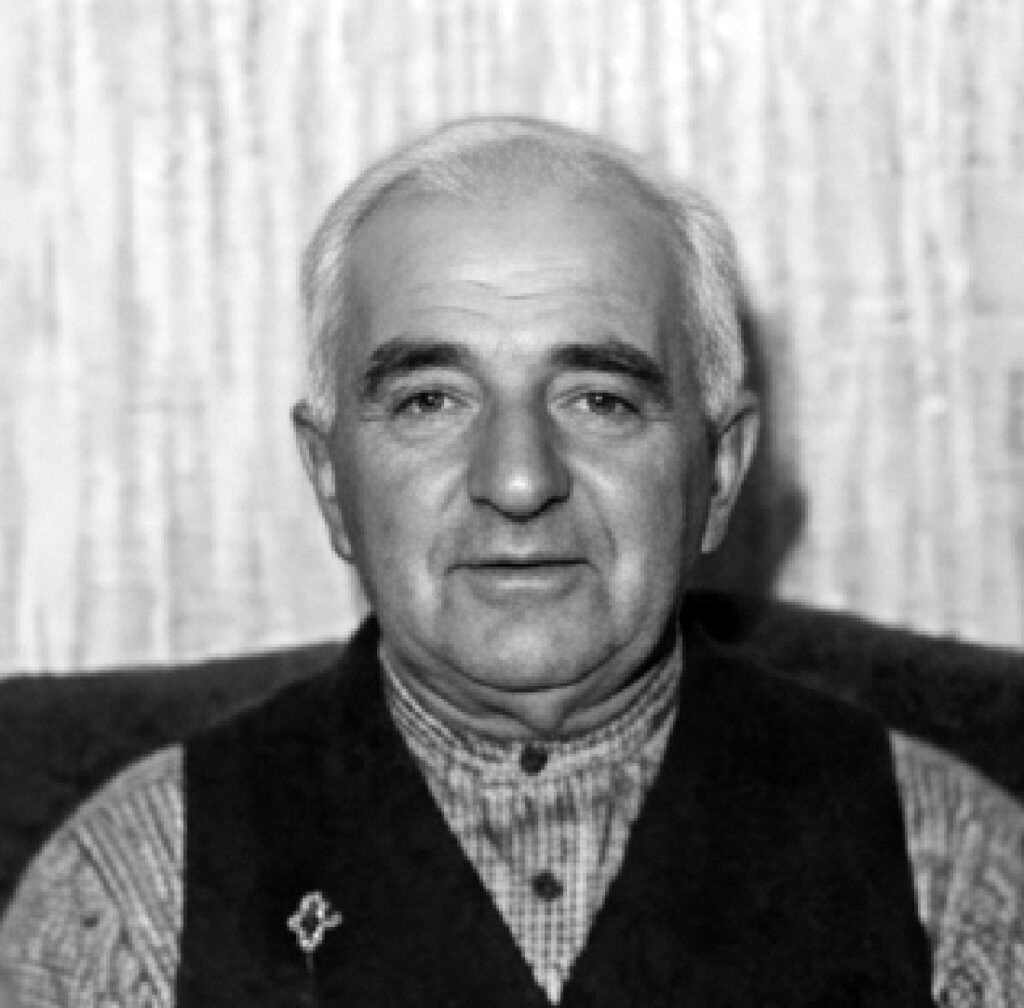
Samuel John Cornish
Photograph -
Finally the brother of Lucy, Elizabeth and Alice: Samuel John Cornish (my dear Grandad) who went on to marry Vera Riona Ridgeway of ‘Rose Cottage’ Bishopsteignton
A Parallel Line at Lower Rixdale
4 x Great Grand Uncle Richard Cornish (1795–1866)
Richard married a Mary Wills on 8th June 1826 in Kingsteignton going on to farm Lower Rixdale in Luton. Richard farmed Lower Rixdale until he died there on 4 July 1866, aged 71. His wife Mary sadly died two years previous on 20 September 1864.
Farming Life and Social Standing
By the 19th century, the Cornish family had clearly established themselves as skilled tenant farmers, employers of agricultural labour and long term residents within the parish community. Their holdings at both the Rixdales and Wolfsgrove reflected both stability and responsibility whilst gaining local respect.
Migration Through Devon
The family movement can be traced clearly from North Bovey (1654) to Doddiscombsleigh (early 1700s), progressing into Bishopsteignton (late 1700s) and Luton (1800s) with an eastward movement reflecting the common pattern to seek improved farmland and opportunity. The Cornish family history appears one of continuity, resilience, and gradual advancement within the rural Devon society. Over nine generations, it appears my family had moved from modest beginnings on the edge of Dartmoor to an established farming position in both Luton and Bishopsteignton.
Conclusion
Sadly, the Cornish name in farming came to an end when my grandfather Samuel Cornish retired as farm labourer from ‘Herders Farm’ in Teigngrace, returning to Bishopsteignton to retire alongside his wife Vera. It was here I lived with them both (and my parents) at Cockhaven Close until their passing in 1977 and 1983 respectively.
Their story has represented the enduring backbone of our English countryside: Families whose work, stability, and connection to the land have helped shape local communities across centuries.
Appendix:
Direct Line of Descent
1. Nicholas Cornish (1654–1735) m. Mary Endell
2. Nicholas Cornish (1684–1745) m. Mary May
3. William Cornish (1706–1767) m. Elizabeth Cox
4. James Cornish (1729–1784) m. Elizabeth Hamlyn
5. James Cornish (1753–1835) m. Joanne Rich
6. James Cornish (1790–1857) m. Mary Grills
7. George Henry Cornish (1813–1901) m. Ann Adams
8. John Cornish (1844-1927) m. Mary Elizabeth Hillman
9. John E Cornish (1876-1941) m. Alice Maud Mary White
10. Samuel John Cornish (1901-1977) m. Vera Riona Ridgeway