
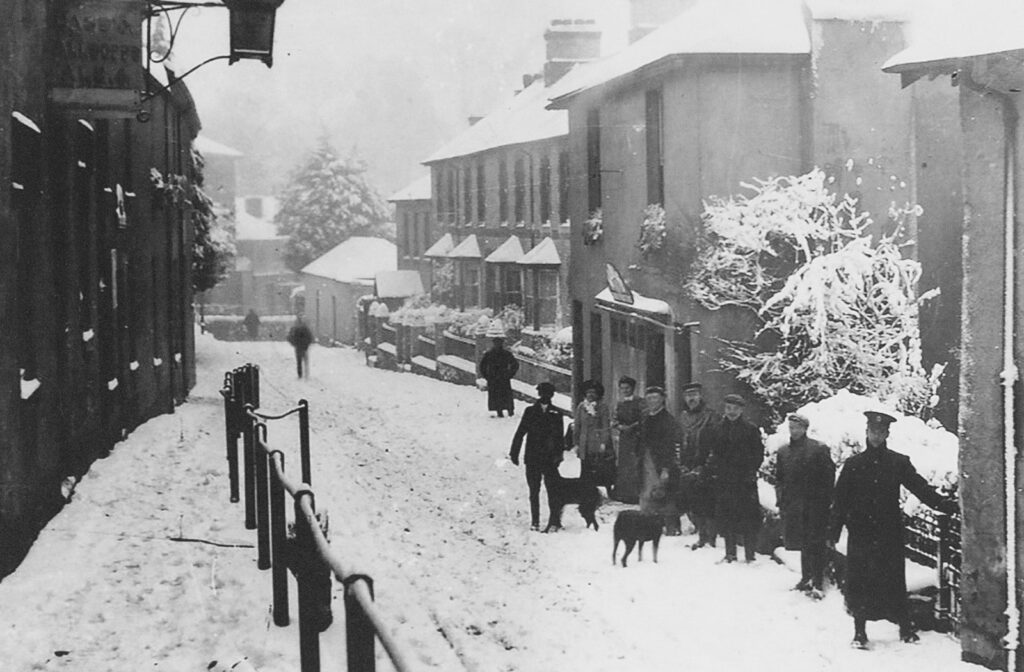
The Butchers shop, Fore Street, Bishopsteignton in the snow c 1911-12
1700s–1800s: Early Fore Street
Long before the noise of motorised traffic, this row of buildings belonged to the Tapley House estate farm. Later, in the 1800s, this land and buildings were owned by the Templer family of Lindridge House a grand mansion on the outskirts of the village.
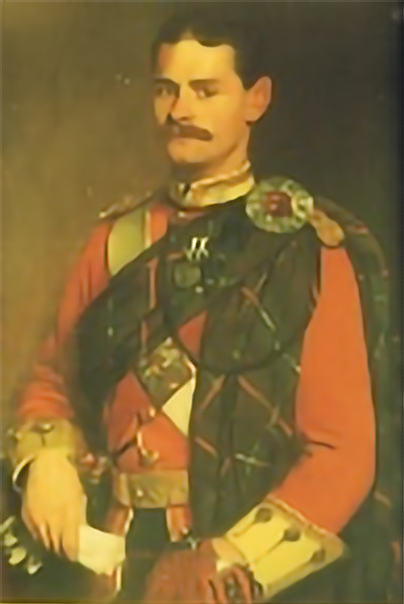
Captain John George Edmund Templer of Lindridge 1855 - 1924
In 1883, on the death of James George John Templer aged 54, (who had inherited the estate from his great uncle Rev. John Templer at the age of three), his eldest son Captain John George Edmund Templer, a Justice of the Peace, a Captain in the Highland Light Infantry and Captain and honorary Major in the Royal 1st Devon Imperial Yeomanry, inherited Lindridge estates including the Fore Street land.
John George Edmund Templer holds the distinction of being the first person in the district to drive a motor car, reflecting a progressive spirit.
1889: Alfred Honywill’s Purchase
Alfred John Honywill had grown up in the village. His mother Grace ran a grocery and butcher’s shop on the high pavement, where the rhythm of village trade shaped his childhood.
His story truly begins in 1889, Having leased the properties for many years, on 8th April 1889 John George Edmund Templer sold and conveyed the buildings and land now known as 25 Fore Street to Alfred John Honywill, a butcher and cattle dealer.
The purchase included numbers 27, 29, 31, 33. and number 23 a cottage at the rear of the butcher’s shop. The agreed sale price was £1,200, (approx. £201,000 in 2026.) The relevant tithe map numbers being 1261, 1260, 1257, 1258, 1259, and 1262. This would define his family’s life for decades.
Alfred was already a familiar figure. A butcher with an abattoir behind his home, known as “the slaughterhouse.” and an orchard to tend. The butcher’s shop at the front soon became a fixture of village life, remaining in operation for more than a century.
1894–1898: Orchard Terrace
The village watched Alfred expand his little empire. He borrowed money, bought an orchard facing Fore Street and commissioned the planning of six cottages to be known as Orchard Terrace.
In 1894. Alfred Honywill received construction tenders for the six cottages: Mr Fey of Bishopsteignton at £735, Mr Pook of Bishopsteignton at £960, and Mr Lamacroft of Dawlish at £1,008. Mr Fey secured the contract at £735. (approx. £123,000 in 2026). With Mr Siegar of Newton Abbot as architect. These were built between 1895 and 1898.
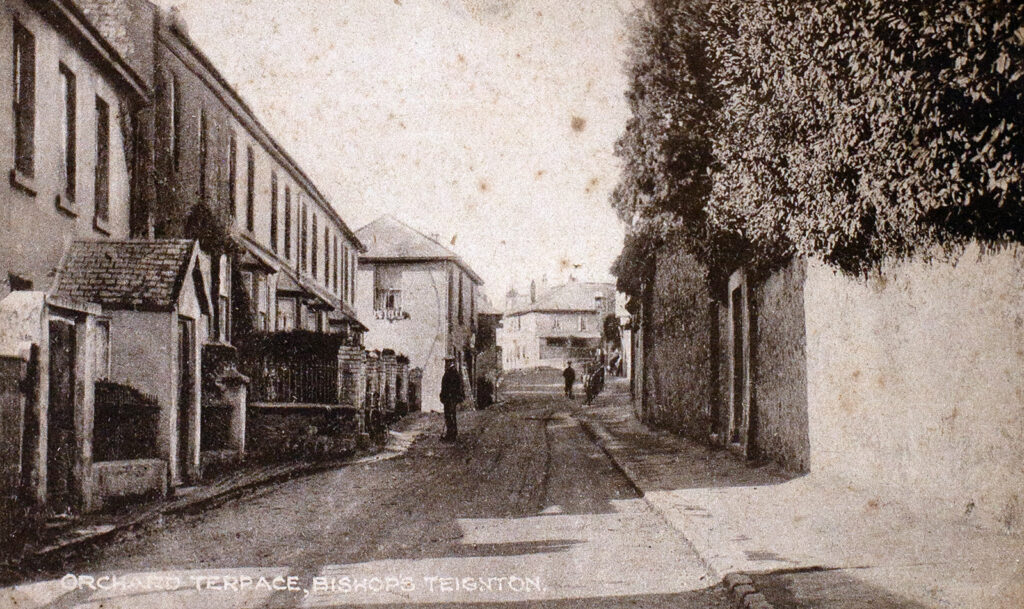
Orchard Terrace on the left leading up towards the butchers shop c1905
Alfred’s sister Susan lived in 23 Fore Street, at this time known as Orchard Cottage, for more than thirty years, her window overlooking the bustle of Post Office Street, as this part of Fore Street was then known.
To the side of this cottage stood a barn where the Plymouth Brethren gathered for meetings. When it was demolished to extend Orchard Cottage, the Brethren simply moved to the other end of the row into number 33A, for many years known as The Gospel Hall.
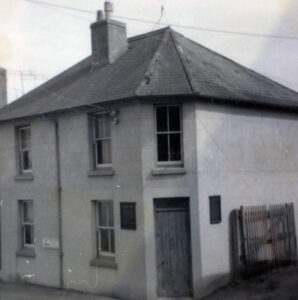
The Gospel Hall in Fore Street
1902 & 1911: Coronations and Community Traditions
Life in Bishopsteignton, was not just work and worship, there were celebrations too. Coronations in 1902 and 1911 brought processions, bonfires on Haldon, children clutching commemorative mugs, and the ever‑present “meat tea” at Murley Grange. In Bishopsteignton, meat was more than food; it was tradition.
The centre of the 1911 Coronation attractions was the school, where in the playground a screen had been erected showing pictures of King George V and Queen Mary with members of the Royal family plus others of local interest.
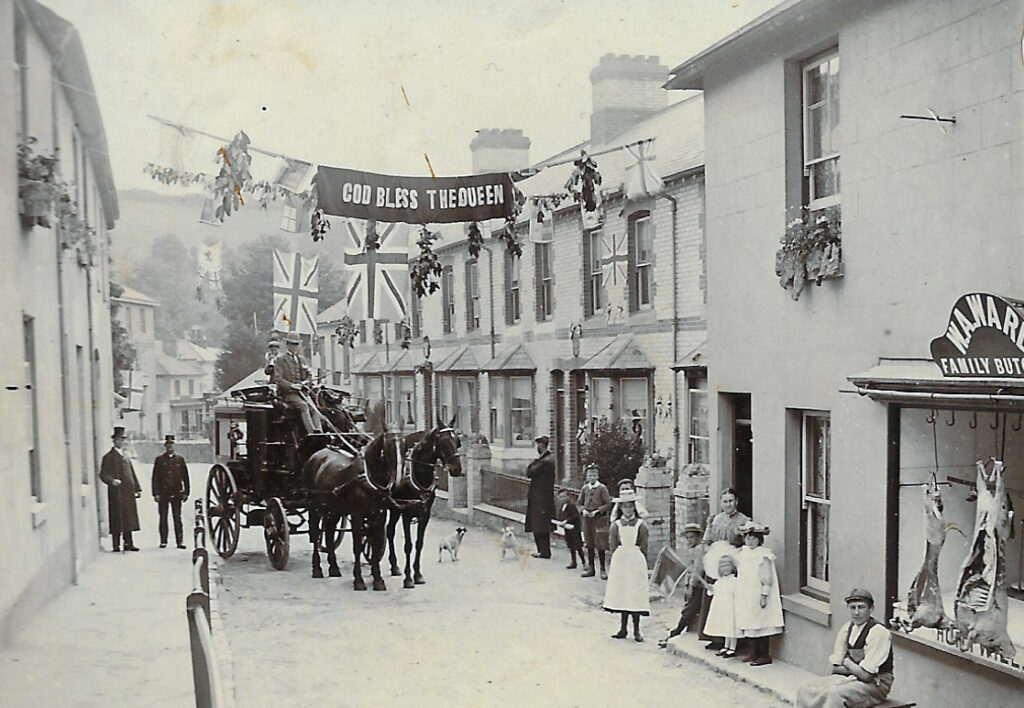
Fore Street 1911. Celebration of the Coronation of King George V and Queen Mary.
1905: The Ward Family Arrives
When Alfred Honywill retired in 1905, he leased the butcher’s shop to William Asa Ward, whose family had long run a butchery in Kingsteignton. The Wards became part of the Fore Street story, sometimes in colourful ways. William Asa was once fined for keeping a carriage without a licence, after villagers reported seeing his wife driving the dog cart alone toward Newton Abbot.
Read more of the story of the Butchers shop, the Ward family and other people in the next article - The story of the Fore Street Butchers and the People part 2 - coming soon.